
Six applications where bearing choice decides performance.
The same bearing size behaves differently in a robot joint, a machine tool spindle and a wafer handling stage. The review starts from the failure mode the application cannot accept, not from a catalogue page.
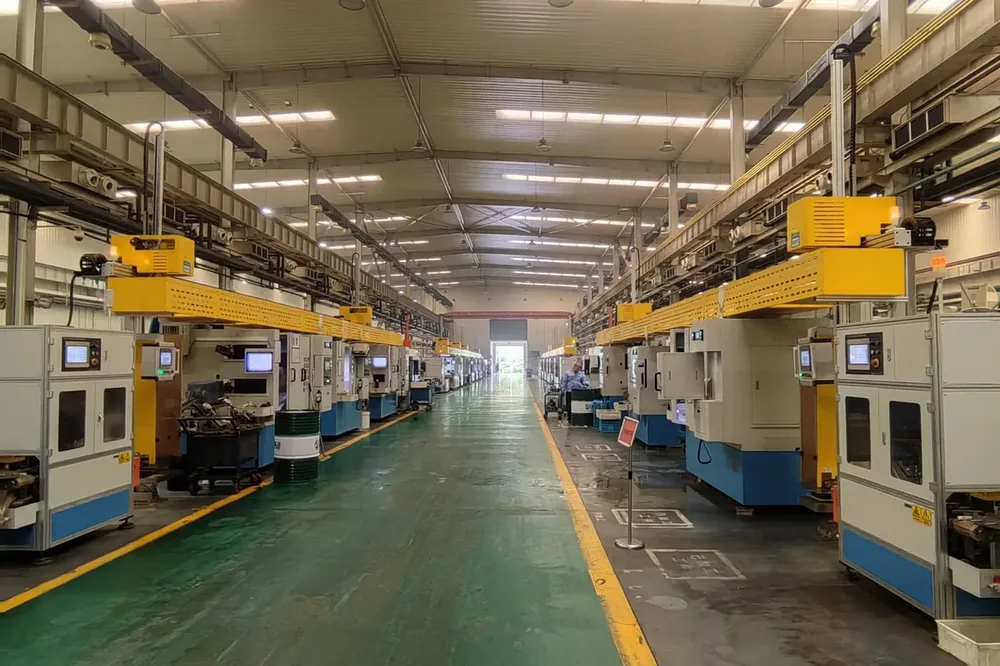
Stiffness and runout under continuous rotation.
In spindles and rotary tables, the bearing sets the accuracy the machine can hold after thermal growth. Preload, contact angle and mounting stiffness matter as much as the tolerance class on paper.
- What is reviewedPreload, contact angle, lubrication and the thermal path through the housing.
- Typical familiesAngular contact, cylindrical roller, crossed roller and thin section bearings.
- AcceptanceRunout and stiffness measured against the values agreed for the assembly.
Repeatability in an envelope that keeps shrinking.
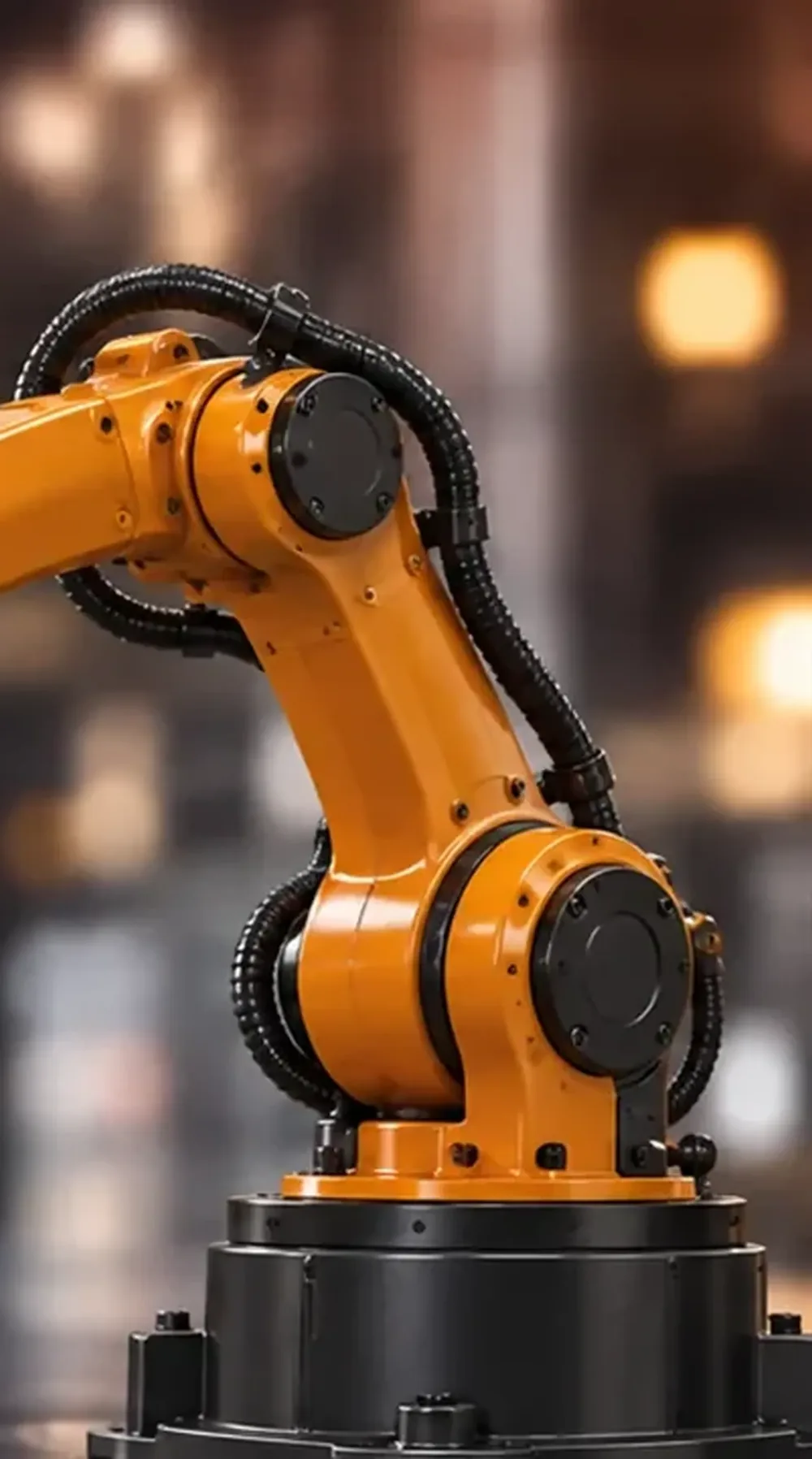
Robot joints combine moment loads, reversing rotation and a housing that cannot grow. Crossed roller and thin section designs carry both axial and radial load in one compact set.
- What is reviewedMoment stiffness, starting torque, backlash and the mounting interface.
- Typical familiesCrossed roller, thin section, slewing ring and custom flanged designs.
- AcceptanceClearance or preload, runout and mounting hole position.
Slow rotation, large moments, long intervals.
Yaw and pitch systems rotate slowly under heavy moment loads and are expected to survive long service intervals. Seal integrity and lubrication retention often decide life more than the dynamic rating.
- What is reviewedMoment load, sealing, lubrication route and mounting bolt pattern.
- Typical familiesSlewing ring bearings, custom large diameter rings and geared designs.
- AcceptanceGear quality, raceway hardness records and sealing arrangement.
Shock loads in an environment that punishes seals.
Construction, agricultural and material handling equipment exposes bearings to impact, dust and water. The design margin has to sit in the right place: material, heat treatment and sealing rather than nominal rating alone.
- What is reviewedShock load, contamination level, maintenance access and replacement method.
- Typical familiesRoller, needle roller, mounted units and non-standard housings.
- AcceptanceHardness records, clearance and seal performance after assembly.
A bearing inside the measurement loop.
Wafer handling robots, transfer chambers and lithography stages combine a short stroke with a runout budget measured in micrometres. Anything the bearing emits stays in the chamber, so lubrication is part of the specification rather than the maintenance plan.
- What is reviewedDry or low-outgassing lubrication, cage material, particle generation and mounting face flatness.
- Typical familiesThin section, crossed roller, and stainless or hybrid rings with ceramic rolling elements.
- AcceptanceRunning torque, runout, and a cleaning and packing route agreed before dispatch.
Tell us the chamber pressure, the cleaning step and the axis the bearing sits on. Those three answers decide more than the bore size.
The cleaning agent and the number of cycles usually eliminate more material routes than the load case does.
Repeatability that has to survive cleaning.
Imaging gantries, analysers and surgical positioning stages rotate slowly but cannot absorb backlash or drift. The sterilisation route decides the material and the seal before the load rating is considered.
- What is reviewedBacklash, starting torque, corrosion resistance and the cleaning cycle the part will see.
- Typical familiesThin section, stainless rings, ceramic hybrid and small non-standard designs.
- AcceptanceMaterial test report, dimensional report and torque values agreed in writing.
If rotation is the constraint, it can be reviewed.
Packaging machinery, printing presses, textile equipment, marine systems and test rigs use special bearings for the same reason: the standard envelope does not fit.
No space for a catalogue series
Thin section and crossed roller designs put load capacity into a smaller radial section.
Temperature, medium, vacuum
Material, cage, lubricant and seal are selected against the actual operating condition.
Flanges, gears, holes
Mounting features are integrated into the ring rather than added as separate parts.
Describe the failure you cannot accept.
Load, speed, temperature and the consequence of failure are enough to start. The review will tell you which family fits and what has to be confirmed.