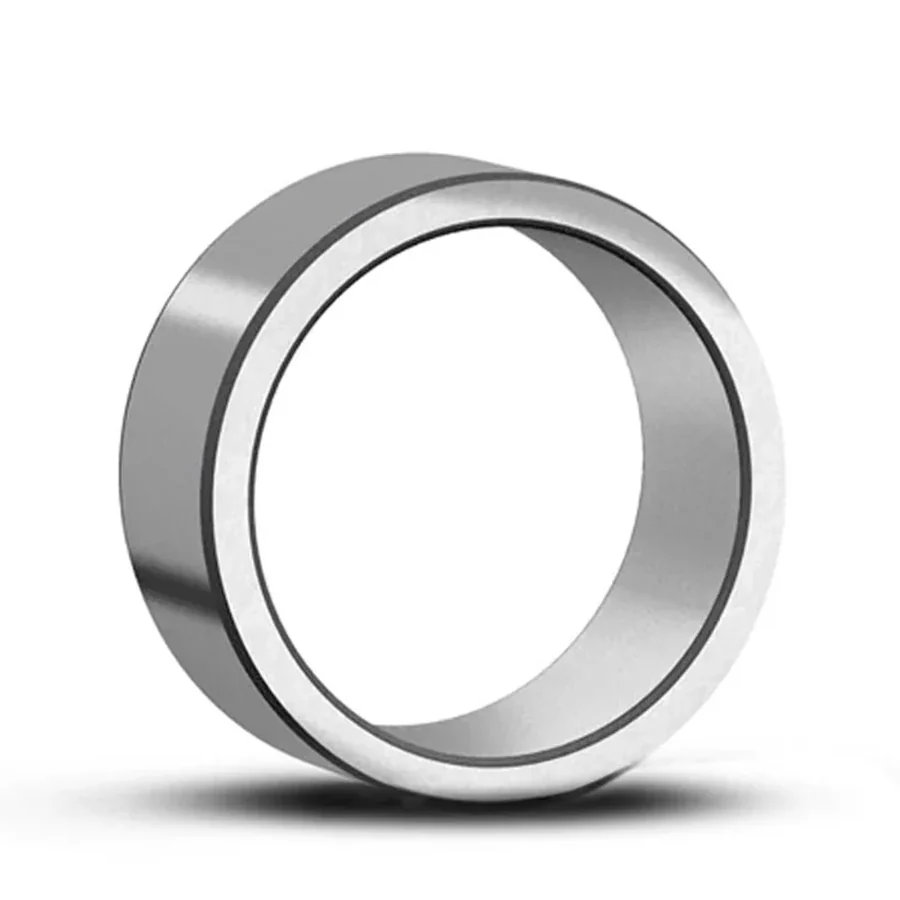
Obsolete bearing replacement, specified from the part itself.
When a maker discontinues a bearing, the machine does not stop waiting. Send the part number, the failed part or a drawing: the replacement is specified against the housing, the shaft and the duty it has to survive, and the dimensions come back for confirmation before anything is made.
- Proposal from what you can sendPart number, photo, sample or drawing
- Lead time stated at quotationAgainst the route that was quoted
- Reverse engineeringSample measured, dimensions confirmed with you
- Batch documentationMaterial and dimensional reports with the goods
What qualifies as obsolete.
Three cases reach this desk, and all three start the same way: with whatever you can send.
The maker no longer lists it
The machine is healthy, the spare is out of production. The replacement is specified against the housing and the shaft, not against a catalogue page.
The quoted date keeps moving
Production continues, but every reorder becomes a planning risk. A second source, specified from the part rather than from the catalogue, removes that risk.
No number survives
The marking is gone or was never there. The part is measured, the dimensions come back for confirmation, and a drawing is issued from the agreed values.
Six steps from old part to replacement.
Each step produces something you can check, in line with how the rest of this site works: agreed in writing before production.
Send what exists
Part number, drawing, photos with a scale reference, or the physical part itself. Any of the four is enough to start.
Identify and measure
Where a number exists, the boundary dimensions are checked against it. Where none exists, the part is measured and the values returned for your confirmation.
Review the application
Load, speed, temperature and mounting decide the internal specification. The replacement is matched to the duty, not only to the envelope.
Propose in writing
A specification with dimensions, material, clearance and inspection items, plus the terms it is offered on — once the input has been reviewed.
Sample or first article
For critical positions, a sample or first article is produced and measured before the batch. The report travels with the parts.
Batch and records
Series production to the same specification, with batch identification and documentation, ready for repeat orders.
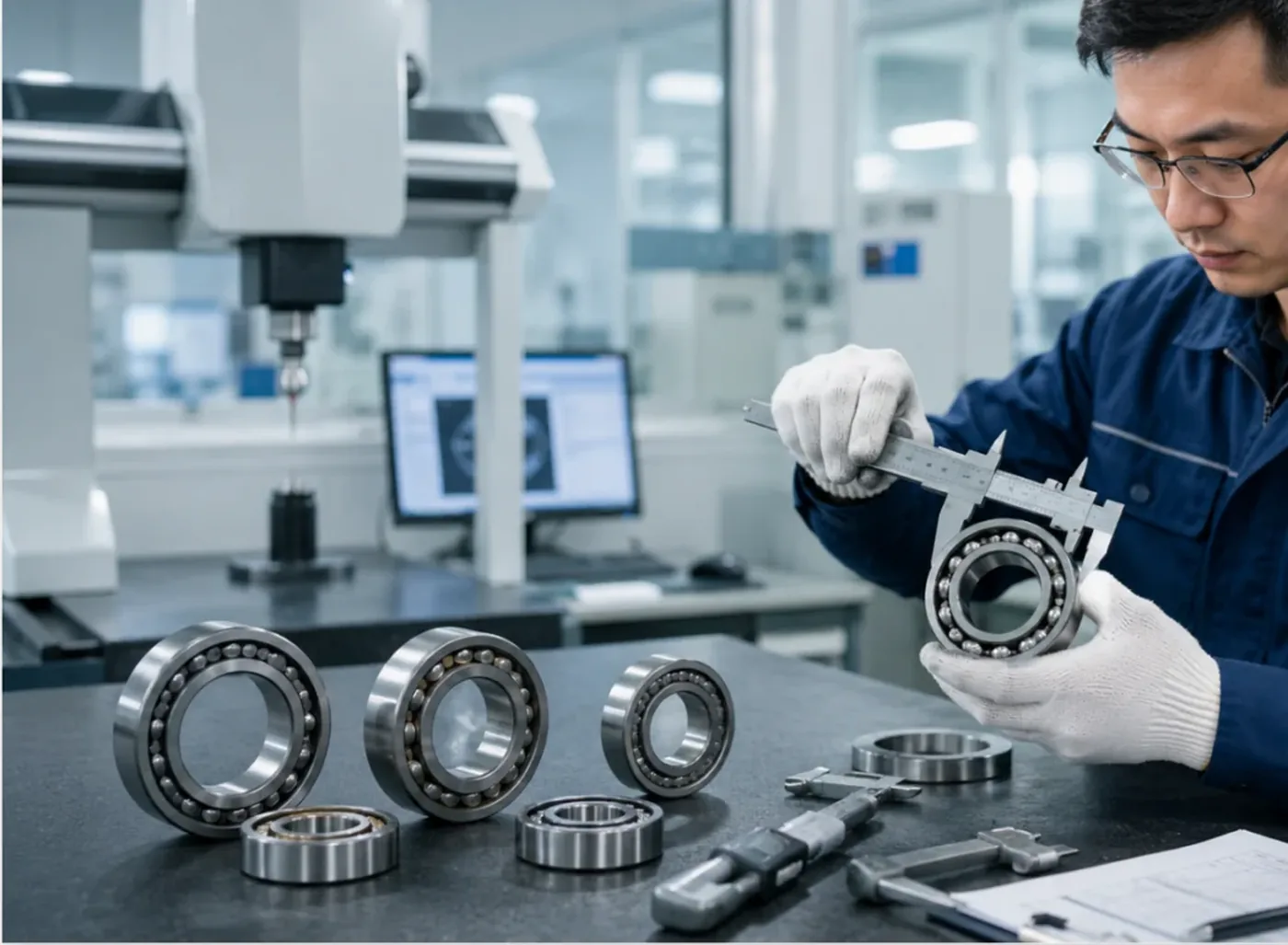
A part number is a starting point, not a boundary.
Cross-reference tables tell you what fits. They do not tell you what lasts. The replacement review covers both: the envelope from the original number, the internals from your working conditions.
- Envelope firstBore, outside diameter, width and mounting features match the position the bearing came from.
- Internals reviewedClearance, cage and lubrication are set against the actual duty, which sometimes differs from the original choice.
- Fix repeated failuresWhere the old part failed again and again, the failure mode is reviewed before the replacement is specified — corrosion, contamination and heat each point to a different fix.
- Documents on arrivalMaterial report, dimensional report and batch identification, so receiving can verify against the agreed specification.
What to send with the enquiry.
The more of this arrives with the first message, the shorter the loop. Missing values are asked for — never assumed.
The ten points that matter
- Part number of the current bearing, if legible
- The machine and the position the bearing works in
- Measured bore, outside diameter and width
- Load direction and magnitude, if known
- Speed and duty cycle
- Continuous and peak temperature
- Medium: water, steam, dust, coolant, vacuum
- Accuracy and clearance requirements
- Sealing and lubrication preferences
- Annual quantity and the date the parts are needed
Request a replacement
Fields marked with * are required. Part photos and drawings can be attached.
One part number is enough to start.
Send what you have. The first reply confirms whether a replacement can be made and what is still missing.