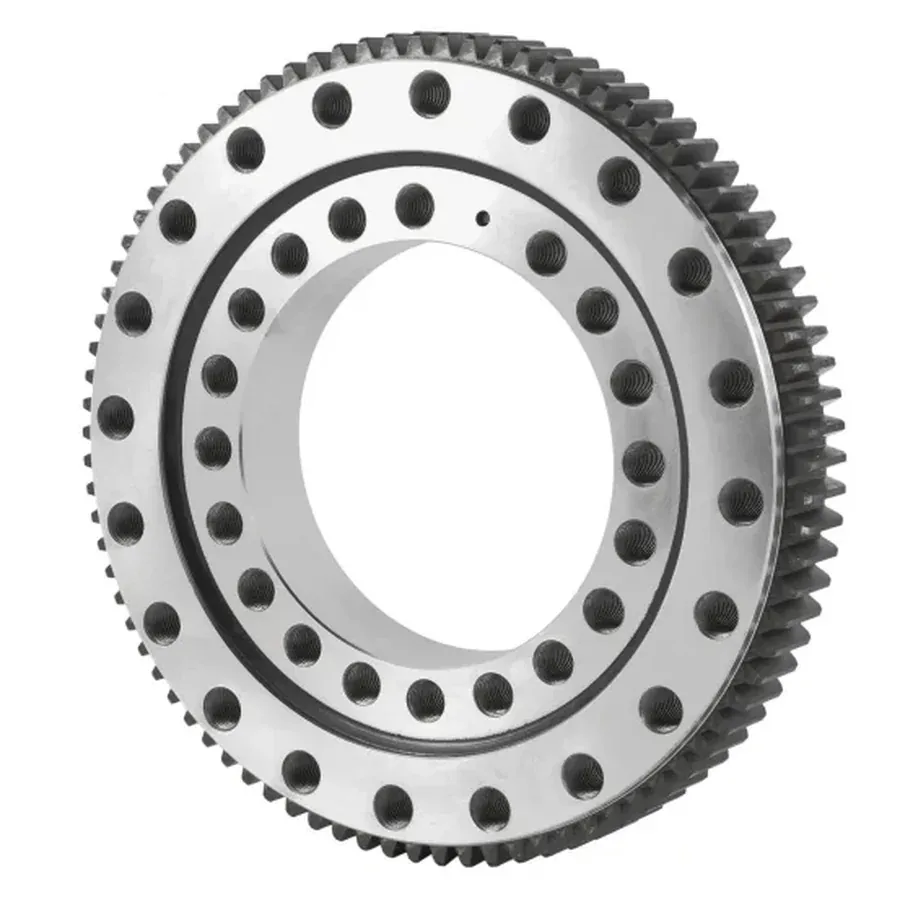
Made to drawing
A slewing ring is built to the mounting interface, so the interface is the first drawing we read.
Ring diameter, bolt circle, hole count and gear data come from the structure the ring sits on, not from a catalogue page. The load case, including the tilting moment and the duty cycle, decides the raceway arrangement: four point contact ball, double row ball, crossed roller or three row roller.
Gear teeth and raceway hardness are reviewed together, because a geared ring is loaded on both. If the mounting face is machined in one pass with the bolt circle, that information belongs on the drawing too.
RacewayFour point contact, double row, crossed roller
DriveInternal gear, external gear or ungeared
Decides the fitBolt circle, mounting flatness, clearance
What to send
- Ring drawing, or bolt circle, hole count and gear data
- Axial, radial and tilting moment loads
- Rotation speed and the duty cycle
- Environment: dust, water, temperature range
- Whether the ring has to be geared, and on which ring
Drawings and samples are handled confidentially. Email info@splbearings.com or WhatsApp +86 176 5998 0260.
Other special families